

 With the chilly temperatures of winter well entrenched in our Gardens, evergreen foliage clearly plays an important role in providing interest at this time of the year. Conifers serve an important role in providing the bones for the garden, but there is still a need for detail plantings as we walk about our walkways and paths. One plant I have enjoyed using over the past 30 years for winter foliage and form, as well as for its ‘hot’ flowers come spring is the Italian Arum, Arum italicum.
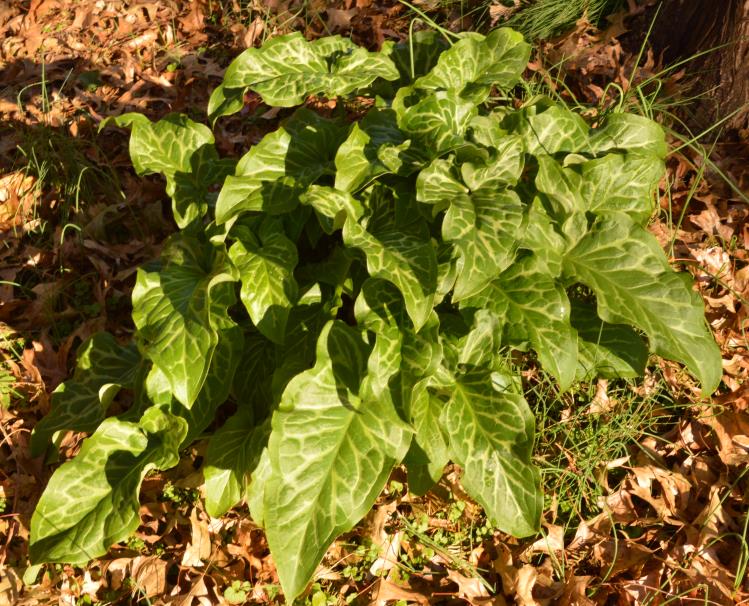
Italian Arum is a member of its own family of Araceae – the Arum family – and is native to Southern Europe, Northern Africa and the Middle East. The genus name was crafted in 1753 by the Swedish Botanist Carl Linnaeus (1707-1778) from the Greek word Aron meaning poisonous. Plants within this genus contain calcium oxalates, which when ingested result in the swelling of the throat, tongue and eventually cause difficulty in breathing and even death for children. The species epithet was penned by the English botanist Philip Miller (1691-1771), meaning ‘of Italy’, giving homage to one of its native regions. The subspecies italicum is the most commonly cultivated form as the foliage has very distinctive and attractive white venation (pictured at right in November).
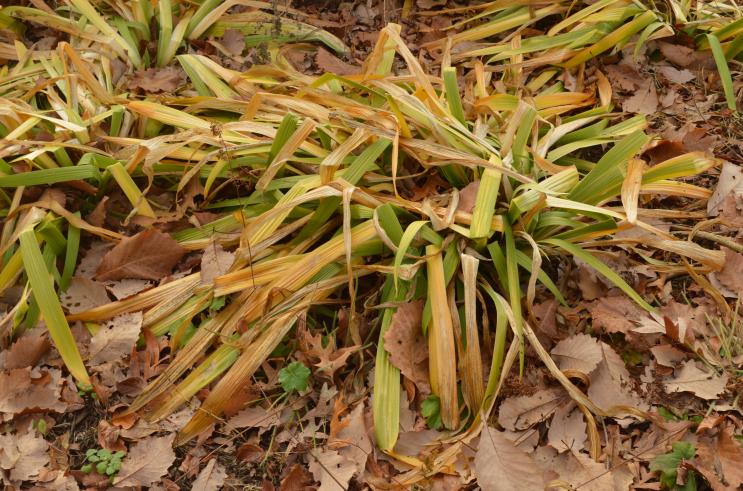
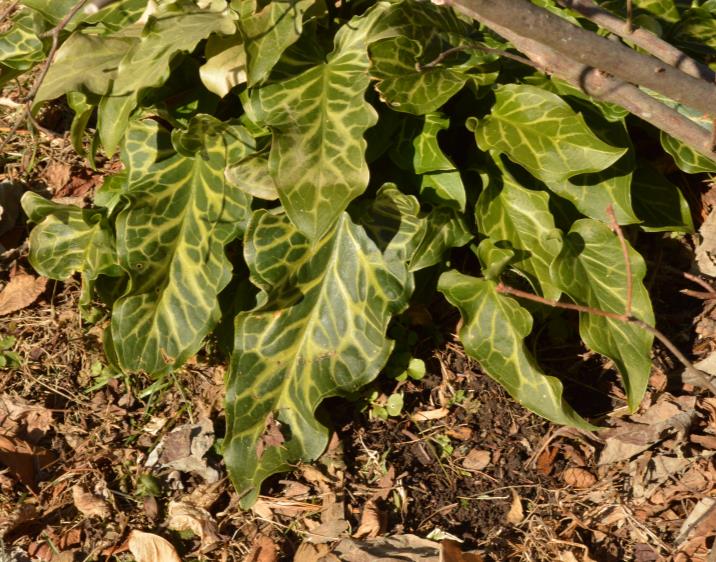 Typical to the genus, Italian Arum grows from a tuber, with the sagittate or arrow-shaped foliage beginning to emerge in late September or early October and typically remaining attractive until the following June (photo at right was taken on February 10th). During severe winters, the foliage can scorch if located in an exposed location, but fret not as it will be refreshed with new foliage come spring. The straight species features glossy, deep green foliage or foliage with white splotches while the previously mentioned subspecies is laced with white venation. The leaves usually grow to 12” tall by 6-8” wide, but can be larger if conditions are ideal. The foliage certainly provides great winter interest, but come spring, it is the flower that makes the plant all the more fascinating!
The flowers appear in May. They consist of a central club-like spadix, appearing in front of and slightly surrounded by a creamy white bract or modified leaf called a spathe. The spathe grows 8-10” tall while the spadix reaches a more demure 4-5” long. The urn-shaped base of the spathe wraps around the lower portion of the spadix and is called the spathe tube. This spathe tube encloses the fertile flowers which appear in whirls, encircling the spadix. The fertile pistillate or female flowers are located at the base of the spadix, with the pollen releasing staminate flowers perched above, with sterile female flowers called pistiloide florets separating the two. Atop the staminate flowers and located near the narrow neck of the urn-like spathe tube are the infertile staminode flowers that produce slightly downward oriented filaments that stretch outwards and nearly touch the neck of the spathe tube. 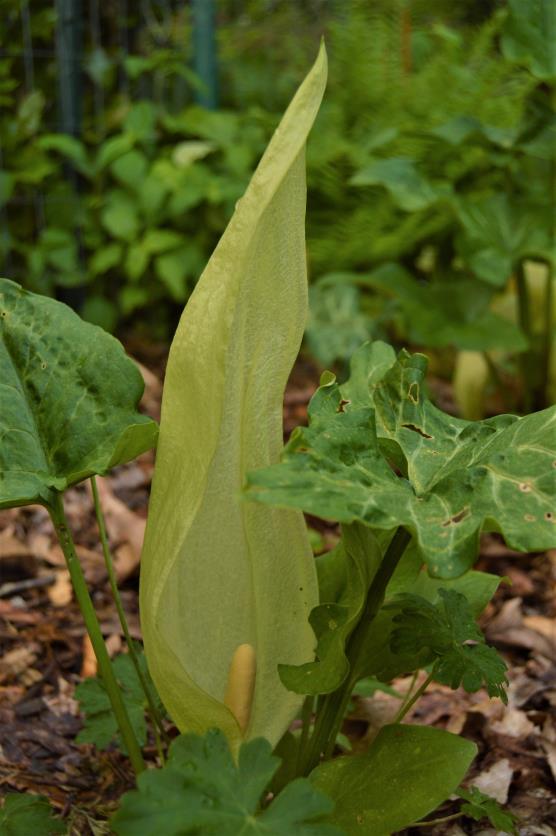 Arum flowers are termed protogynous, whereby the female flowers mature first and are no longer receptive to pollen when the staminate flowers mature and begin to release pollen. This staged maturation prevents the flowers from self-pollinating, resulting in inbreeding depression. To further aid in pollination, the male flowers are thermogenic, whereby they actually go through periods of releasing heat and can become upwards of 50 degrees warmer than the ambient air! Initially, this makes little sense, until one realizes that the flowers are pollinated by flies and the heating of the flowers releases volatile chemicals that smell like rotting meat or even stale urine! None to worry though, since the odors are too faint to be noticed by the passing gardener. Attracted by the odor, small flies are able to push past the filaments of the staminode flowers in search of the source of the odor but, due the slightly downward orientation of the filaments, the flies are not able to escape. The filaments remain resilient against any attempts of escape for around 24 hours, allowing the incarcerated the flies to hopefully deposit pollen from a previously visited flower onto the stigmas. After one day passes, the stigmas become unreceptive to pollen while the staminate flowers begin to shed pollen and the staminode filaments become limp, allowing the pollinators to collect pollen as they move upward and out of the spathe tube. An incredible scenario!
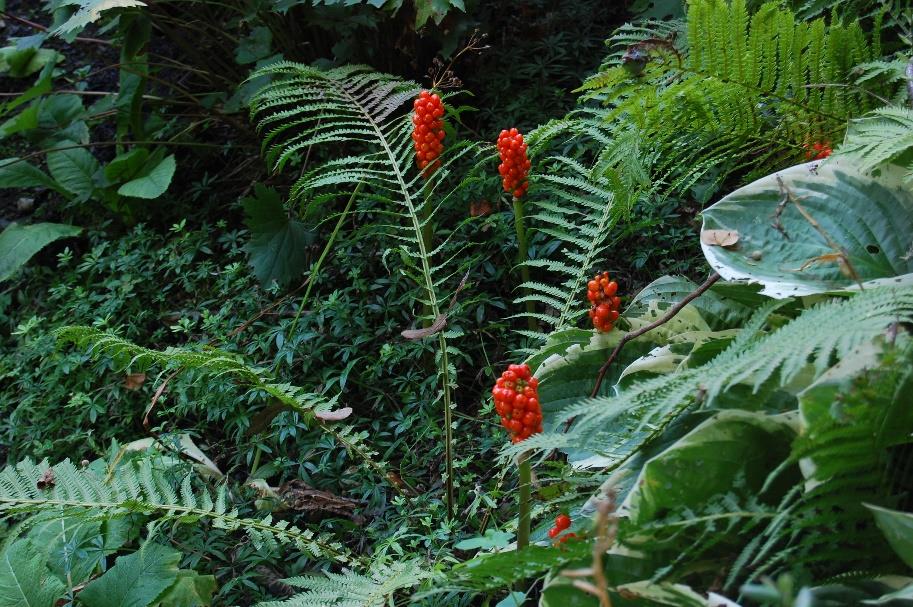
Shortly after the flowers fade the foliage withers, leaving the fruit to develop. The peduncle or stem of the flower proceeds to elongate to 6-12” tall and is topped by an oblong cluster of developing fruit that is covered by a papery tunic. As the tunic dries, it splits open revealing the attractive cluster of red fruits that remain ornamental well into August (pictured below). In the southeastern and northwestern parts of North America, along with Australia, New Zealand and the UK, the dispersal of seeds by birds and even ants have caused this plant to be listed as an invasive, which outcompetes various native plants. I have always kept a watchful eye on this plant in garden settings and although I have seen seedlings produced around the mother plant, it has not proven to be a worrisome self-seeder in NJ. Of course, planting one plant or removing the fruit before it matures will negate any worries about invasiveness and allow the gardener to simply enjoy its winter and early spring beauty.
Hardy from zones 5-8, the plants prefer to be located in a humus rich, shaded location where the soil does not become excessively dry throughout the growing season. They can even be located in fairly wet soils, as I witnessed at the Cornell Botanic Gardens where they are planted along a stream. The tubers readily produce offsets during the late fall, allowing an individual plant to gradually increase into a substantial clump with time. It is also interesting to note the tuber produce two types of roots: vertically oriented contractile roots during the early fall that help to pull the tubers ever deeper into the soil, followed by a mat of horizontal roots whose purpose is to absorb nutrients and water.
Available as a container plant or as tubers from bulb companies, Italian Arum is not any easy plant to find; most nurseries do not like to stock container plants since there is nothing to see following June. However, it is an amazing plant for the garden, providing nearly year-round interest with a flower that literally becomes warm to the touch during pollination. Truly one hot plant that needs to grace more mid-winter gardens!
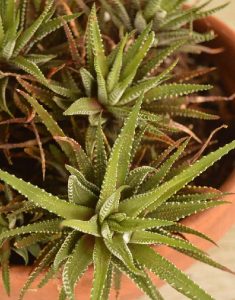 botanist and entomologist Adrian Hardy Haworth (1767-1833) who described 21 species of the genus throughout his career, although he too classified them as Aloe! In 2013, based upon genetic studies, the British botanist Gordon Douglas Rowley (1921-2019) split the genus creating the new genus of Haworthiopsis. The new ending for the name is from the Greek Ópsis for appearance, indicating these plants appear like Haworthia. The most noticeable physical difference is the thicker and harder epidermis or outer covering of the Haworthiopsis leaf when compared to Haworthia. Both Haworthia and Haworthiopsis are native to countries in the southern regions of Africa with the predominance of species found in South Africa, although Mozambique, Swaziland and Namibia are also home to numerous species. Both genera exhibit CAM or Crassulacean Acid Metabolism whereby the leaf stomata open only at night to reduce the loss of water during the day and allow for gas exchange. This allows the plant to be very efficient at conserving water, but also rather slow growing since it can only produce a limited amount of sugars per day based upon the amount of CO2 absorbed at night.
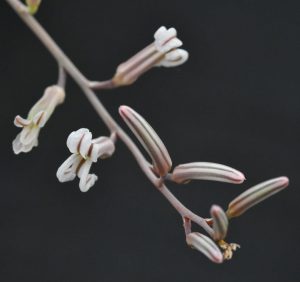 The most commonly grown species, and the plant my mother used with seemingly reckless abandon is the Zebra Cactus or Haworthiopsis attenuata (pictured at right). The species epithet is from the Latin Attenuatus meaning diminished or lessened and refers to the form of the leaf, which tapers or diminishes to a sharp point. The common name of Zebra Cactus comes from the ornamental bands of small white warty projections called tubercles on the back sides of the dark green leaves, which with a touch of imagination resemble the markings of a Zebra. The tubercles allow the expansion of the leaf during the moister summer months without imparting any tearing or damage to the stiff epidermis of the leaf. The plants are stemless and produce 3-6” diameter rosettes of foliage that develop offsets or pups over time and eventually develop into sizable colonies. White to soft pink flowers are occasionally produced during late fall and winter, which corresponds to the spring and summer months in the plants native homeland. The genetic clock does not change simply because the plants are now in North America! The flowers are located along slender stems that bend like fishing poles under the weight of the flowers. The flowers actually consist of tepals, whereby the petals and the leafy calyx look identical and they are displayed in a bilobate arrangement, with a very distinguished upper and lower lip, as seen above. The tip of the lips reflex back, giving the flower a very pronounce appearance similar to a set of puckered lips. Green or reddish brown stripes run down the inside and outside of the flower and most likely serve as nectar guides or visual cues for visiting pollinators.
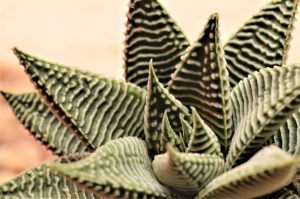 Another very ornamental species is Haworthiopsis limifolia, commonly called the File Leafed Haworthia or Fairies Washboard. Herman Wilhelm Rudolf Marloth (1855-1931), a German born South African botanist and pharmacist, described the species in 1910, under the genus Haworthia. The epithet is from the Latin limo, meaning to diminish or file off, a reference to file-like appearance of the raised linear ridges of tubercles along the leaves. The common name of Fairies Washboard is also a reference to the raised ridges of tubercles. The leaves are arranged in stemless rosettes, although they are slightly broader, especially near the base when compared to its previously mentioned cousin. ‘Spider White’ (pictured above) is a relatively recent introduction with very white tubercles and is the recipient of the 2015 Dutch ‘Glass Tulip’ award for best new houseplant. The tubercles are a very showy white and give the foliage a very attractive creamy glow!
 summer months, the plants are actively growing and are tolerant of our summer rainfalls, allowing them to be used in summer container arrangements or simply set outside for the summer. In the regions where they are native, they typically grow in the shadow of a rock and prefer a similar, lightly shaded location as an ornamental. Fertilize with a half dilute houseplant food that has a higher phosphorus content, such as 5-10-5. Come fall bring the plants inside and give them a windowsill with bright light or morning light. The key in winter is to let the soil dry out completely in-between watering, which can mean upwards of 2-4 weeks without the need for a watering can – something that may prove very difficult for some gardeners!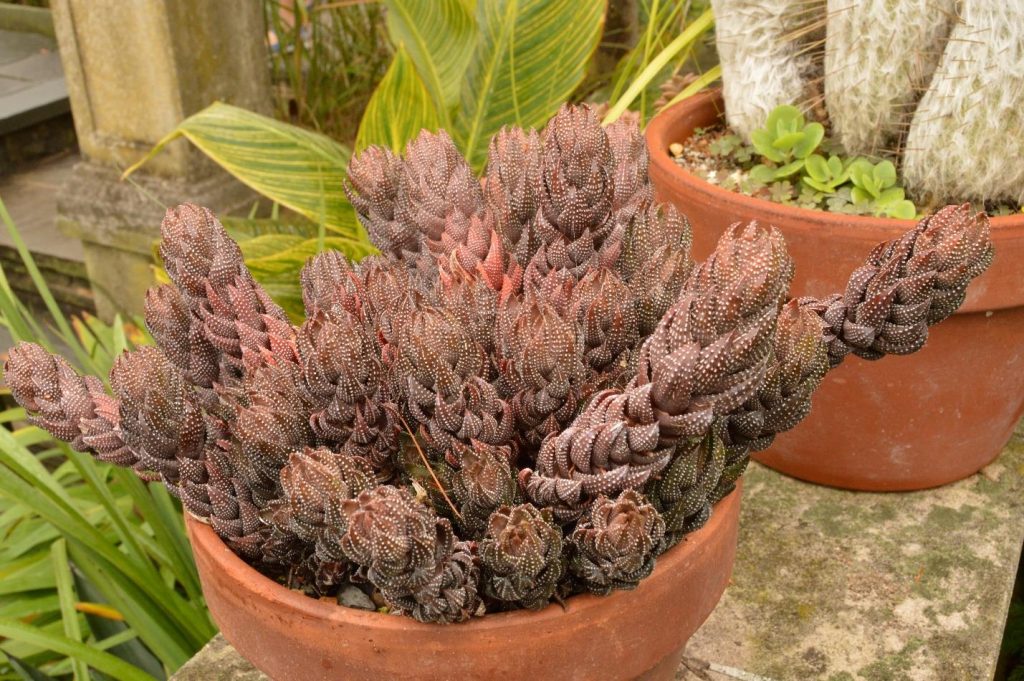

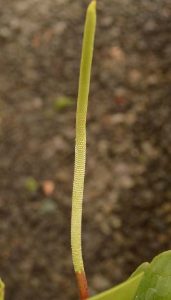 Peperomia is in the family Piperaceae or Pepper family, which derives its common familial name not from peppers we eat as a vegetable, but from Piper nigrum, the source of black pepper! The genus Peperomia consists of nearly 1,000 species, most of which are found throughout tropical regions of South America, although a few are located in Africa, Mexico and the Caribbean. The genus name was penned by the Spanish Botanists Hipólito Ruiz López (1754-1816) and José Antonio Pavón Jiménez (1754-1840) in 1794, following their 3 botanical tours of Peru and Chile during 1777 and 1788. The name Peperomia comes from the Greek Pipéri for pepper and Hómoios for resembling or similar, once again a tribute to its distant cousin Piper nigrum. The common name of Radiator Plant was coined by the famed horticulturist Liberty Hyde Bailey (1858-1954); since the plants enjoy warm air and bright light, much as one would find on a window sill above a radiator, he deemed it apropos! For nearly all species of the genus, the foliage provides the primary ornamental appeal, although the flowers are intriguing. The horizontal rows of small flowers are located along a 2-5” long spike (image at right) that emerges from the apical tip of a stem. They are certainly not stunning, but they do provide a touch of interest. Very little research has been conducted on the flower pollination, but it appears many of the plants produce seed asexually via agamospermy, whereby unfertilized ovules yield viable seeds!
 One of the easiest species to grow is Peperomia obtusifolia, commonly called Blunt Leaved Radiator Plant or Baby Rubber Tree. The species epithet comes from the Latin Obtusus for dull or blunt and Folium for leaf, providing the foundation for one of its common names. Originally described by the German botanist Albert Gottfried Dietrich (1795-1856) in 1831, this native of Mexico and the Caribbean has 1-2” glossy round leaves that appear along stout stems. The plant produces a low, almost shrubby habit, growing to 18” tall by 2’ or greater in diameter. The stems are somewhat brittle and care should be exercised when handling. For December, the form ‘Variegata’ sports attractive creamy white and soft green variegation. Interestingly, there are several forms of ‘Variegata’ on the market. Some have a broad, creamy white margin with an irregular, silvery green central splash that nicely compliments the deep red color of the younger stems (as seen on the left). Others have mottled white and green foliage that is somewhat less impactful yet still very attractive. Regardless, these forms provide great colors for the season.
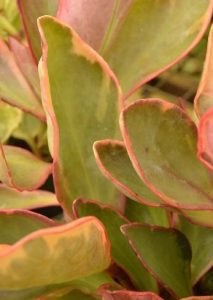 Another easily grown species is Peperomia clusiifolia, the Red-edge Peperomia. Originally named Piper clusiifolia in 1789 by the Dutch Chemist, Doctor and Botanist, Nicolaus Joseph von Jacquin (1727-1817), it was not until 1829 that the British systematic botanist William Jackson Hooker (1785-1865) properly described the plant. Native to the West Indies and Venezuela, the species name describes how the leaves are similar to the tropical genus of woody plants Clusia, which was named after the famed Artois botanist, Carolus Clusius (1526-1609). The plants have thick waxy paddle shaped leaves, growing to 3-4” long with a prominent red margin and red stems. The variety named Tricolor (pictured at right) features foliage splashed with red, white and green, producing a most attractive plant for the home that can be paired very nicely with some Poinsettias! As with the previous species, plants reach upwards of 18” tall and gradually spread to 18-24” around.