
November has dawned partly cloudy and breezy with the promise of the first heavy frosts. From the early autumn lack of rainfall and cool nights, our trees have erupted into a bonanza of spectacular colors and the soil is now adequately moist to bring plants safely into the start of winter without the worry of drought. The light frosts of October and even September in northern areas have started to impact our annuals but very soon, they will need to be removed with the onset of colder weather. Even though the weather is becoming cooler, there is still much to do in the Garden!
Things to do:
- For those growing carrots, beets, turnips or Jerusalem artichokes and wishing to extend the harvest into winter, apply a heavy mulch of straw to the crops to prevent the soil from freezing deep and both ruining the crop and making harvest near impossible. Parsley will continue to grow well into December, especially if covered by a basket on particularly cold nights.
- Mulch garlic with a 3-4” layer of leaves to prevent heaving of the cloves.
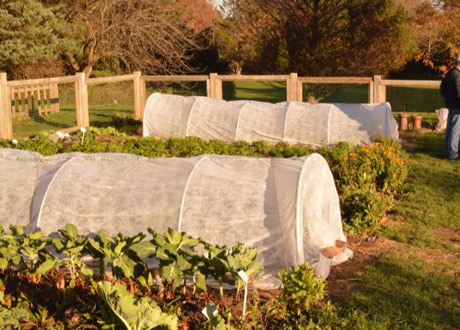
- Consider setting up a low tunnel and cover it with Agribon fabric to easily extend the growing and harvesting season through December. It is ideal for Bok Choi, spinach and other cool season vegetable crops.
- Remove and compost the warm season vegetables. If you witnessed signs of late blight in your tomatoes, make certain to remove all the foliage and vines of the plants from the garden. It is best to compost them separately if possible and reuse the compost in other portions of your yard.
- Fertilize and lime the lawn – after a soil test! November is the ideal time to develop a proper root system to get your lawn through next summer’s heat and droughts while the soil test will tell you what formulation of fertilizer is best.
- Remove heavy accumulations of leaves from lawn areas. Minor amounts can be shredded and allowed to filter through the grass to the ground. These leaf fragments have been found to be a good source of organic matter and beneficial minor nutrients for lawns.
- Bring in all the hoses and drain outdoor pipes and irrigations systems before the start of heavy freezes later this month. We have had a good rain of late, but should several weeks pass without rainfall, supplemental irrigation is still needed for newly installed plants.
- For Roses, Peonies, Lilacs, Dogwoods, Beebalm and other plants that may have had black spot, powdery mildew, or other foliar diseases, make certain that all the leaves that could overwinter disease organisms, are removed from the base of the plants.
- Shred and mulch your beds with newly fallen leaves – the lawn mower can dual as a good shredder of the leaves, provided they are not too thick. They can be shredded and they serve as great mulch for annual, perennial and shrub beds. There is no harm in mixing in some grass clippings with the leaves.
- Remove frosted or tired looking annuals from the flowerbeds and compost those that do not reseed or make certain the seed heads are removed. Cleome or Spider Lily will readily reseed over the course of the next year!
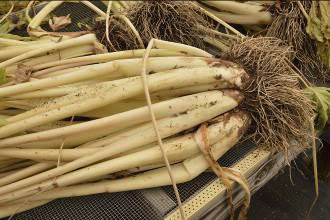
- Finish digging and bring Canna, Alocasia, Colocasia (pictured at right), and Banana roots into the basement. Divide the clumps and either repot them into a new container, making certain to keep the media only slightly moist for the winter or wrap them in several sheets of newspaper.
- Remove the seed heads from Asters as soon as they finish flowering to prevent self-sowing. Many a pink flowered cultivar will magically become blue flowered as the seedlings overwhelm the desired selection.
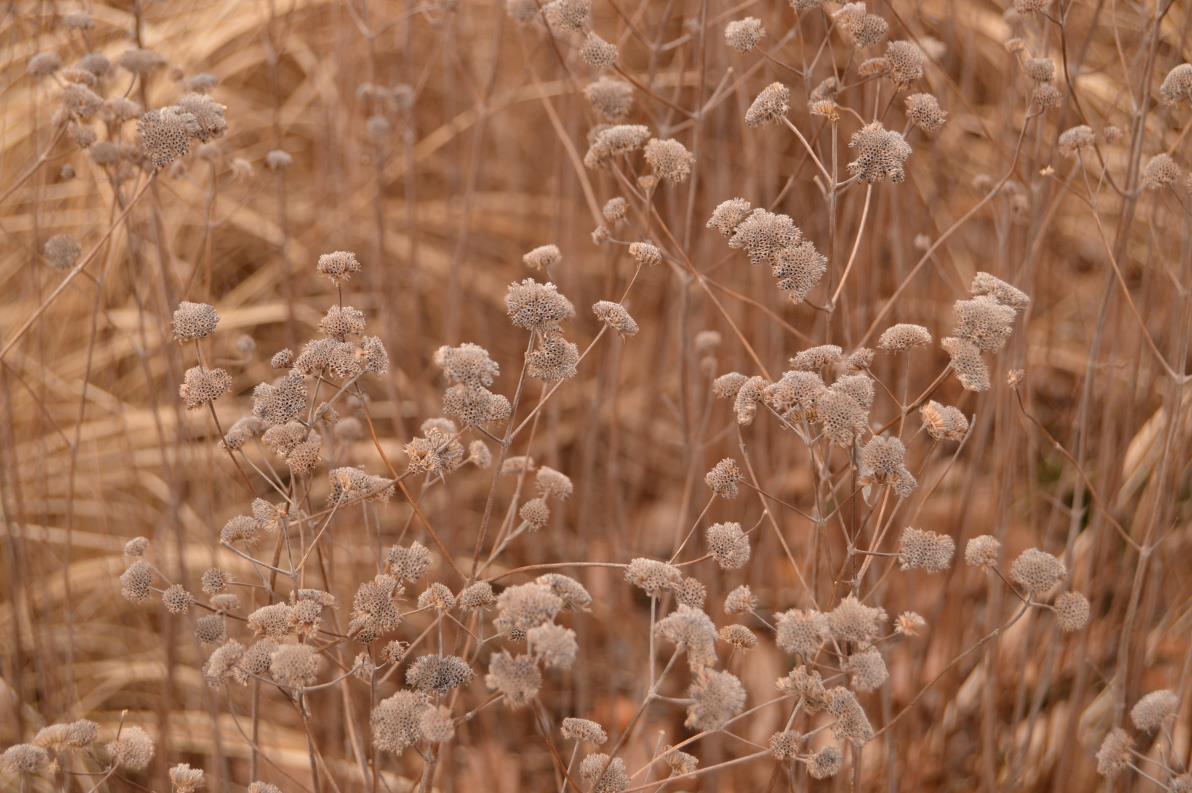
- As the frosts become more severe, some perennials that lack winter interest will require cutting to the ground to keep the border neat and tidy. However, it is important not to become overzealous, since many ornamental grasses and perennials provide winter habitat for many of our native bees and pollinators. Others, like Rudbeckia (Black-eyed Susan) and Echinacea (Purple Cone Flower) are important sources of food for birds like Goldfinches. They can also provide attractive winter outline, as witnessed by the Pycnanthemum muticum (Mountain Mint) pictured at the end of the article.
- As the foliage of Bearded Iris (Iris germanica) turn brown with the frosts, make certain to remove all the brown foliage since the moth of the Iris Borer lays her eggs on the foliage where they will overwinter and cause harm to the rhizome next summer.
- For those with Fig trees, late November is the time to wrap your plants or bring them into a cool basement or garage if they are in a container.
- Finish planting bulbs. Remember, they need to be planted to a depth of 3x the diameter of the bulb. It always takes longer than we think, and some garden centers may offer sales towards the end of the month. For a more mature and impactful display, consider planting several bulbs per hole.
- Continue to weed as time permits! The cool season weeds are flourishing. Getting ahead of them now will help to prevent them from flowering and going to seed come spring.
- Finish emptying clay containers that can crack over the winter and store them in a protected area or upside down and under a tarp if left out-of-doors. For terracotta pots, make certain that the pottery is washed well to remove all the built up fertilizer salts and place out in the sun to ensure that they dry thoroughly before storing.
- At the end of the month, pot up Paperwhite Daffodils and Amaryllis for the Holidays.
- Look over your Garden and contemplate which areas are in need of interest in the form of plants with fruit, form or evergreen foliage. November is still a great time to plant deciduous shrubs and many perennials. In fact, some may be discounted at your local garden center! It is important to mulch your newly planted selections with 3-4 inches of mulch in order to retain moisture and reduce potential heaving for smaller plants.
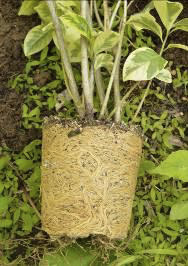
- If you purchase container grown plants at end of season, check to make certain their roots are not encircling the soil mass, as seen in the image at the right. If so, make certain to tease apart the root ball thoroughly as you plant. This will prevent girdling roots and the loss of plant vigor in the future.
- For the houseplants that you brought indoors during October, continue to monitor them for insects and resist the temptation to overwater! Also, remember to rotate the plants 90° or so every couple of weeks. This ensures the plant will not stretch in one direction towards the light. This is especially true when you first bring the plants indoors, as they are probably still growing and are very prone to grow towards the sunlight.
- Save some interesting seed capsules from perennials such as Blackberry Lily, (formerly Belamcanda chinensis now Iris domestica) and combine them with Holly or Beautyberry (Callicarpa species) for a wonderful Thanksgiving centerpiece.
- Enjoy a Happy and Wholesome Thanksgiving with your family and friends!
Bruce Crawford
Program Leader in Home and Public Horticulture
 Aster tataricus is native to the cold regions of Siberia, Northern China, Mongolia, Korea and Japan, where it is native to moist meadows and wetlands. It is a member of the Asteraceae or Sunflower family, which contains close to 32,000 species. Carl Linnaeus (1707-1778) first penned the genus name in 1753 from the Greek Astēr for star, referring to the star-like form of the flowers. Linnaeus established Aster amellus, the European Michaelmas Daisy as the type flower to which all the other plants for this genus are referenced. Initially home to an enormous number of species, the genus was reduced to around 180 species found throughout Eurasia, based on more recent and improved understanding of the genetics. Carolus Linnaeus the Younger (1741-1783), continuing in his father’s footsteps, published this species in 1781 in his book Supplementum Plantarum. The species epithet tataricus comes from Tartay, an archaic name for the geographic region that extended from the Caspian Sea and Ural Mountains east to the Pacific Ocean, including the areas to which this plant is native.
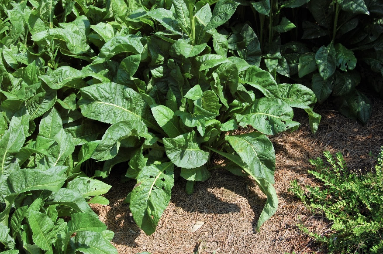
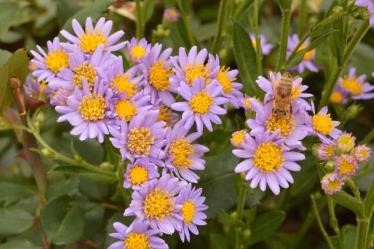 Aster tataricus is a robust plant, to say the least. The coarse, paddle-like shape of the foliage always reminding me of Horseradish with the basal green leaves reaching 16-24” long and up to 6” wide (pictured above). The plants are rhizomatous in nature and can spread over a fairly substantial area of the garden, providing a rather pleasing yet coarse groundcover. In late August to mid-September, the flowering stems elongate, reaching an impressive height of 5-8’ before blooming! The stems are hispid or clothed with straight bristly hairs along with more modestly sized leaves of 3-4” in length and 1” wide. The top of the flower stem branches freely, producing abundant flower buds that open from late September through early November. The flowers (pictured at right) typically have between 12-18 lavender-blue to blue ray florets that resemble petals, surrounding a center of yellow disc florets, creating a beautiful display.
 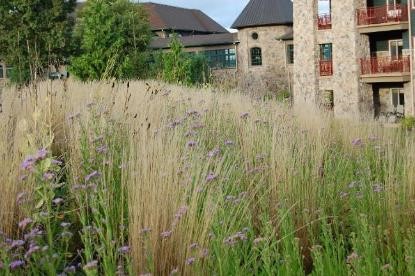 The blue flowers peaking above the grassy foliage, providing a very natural appearance similar to their native meadows. The flowers also have great symbolism. Hanakotoba is the ancient Japanese art of assigning a meaning to a flower, which in turn allows a person to communicate with others without any spoken words. ‘Flower talk’ so to speak! Aster tataricus expresses remembrance, a tribute I suspect due to its late blooming nature!
 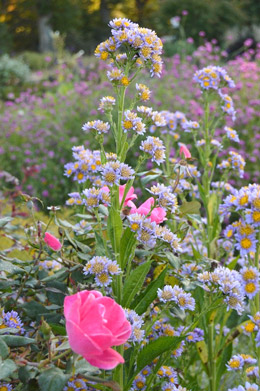 If the species form is a bit too tall, the selection named ‘Jindai’ grows to a more controlled height of 3-4’ tall. Rick Darke of Longwood Gardens and Sylvester ‘Skip’ March of the U.S. National Arboretum discovered this selection at the Jindai Botanic Gardens in Tokyo Japan during 1985. Although shorter in height, they are still spreading in nature and need to be watched to ensure they do not grow beyond their bounds by removing unwanted rhizomes early in spring. I have also found this habit to be a benefit, since the plants will spread into neighboring shrubs and create some attractive combinations. In one instance, as pictured at right, the Aster has spread amongst a Bonica® Shrub Rose and the sky blue flower of the Aster looks great growing amongst the soft pink flowers of the Rose! It has also spread into a Salix alba ‘Britzensis’, commonly known as Coral Bark Willow that is coppiced or pruned back to 8-10” annually. The stems of the Willow develop a light red coloration by mid-October, providing a nice backdrop for flowers. Another pleasant combination is with Amsonia hubrictii, the Blue Star Amsonia; the yellow fall color of the Amsonia pairs beautifully with the central yellow disc flowers of the Aster, as seen in the image below. So many combinations!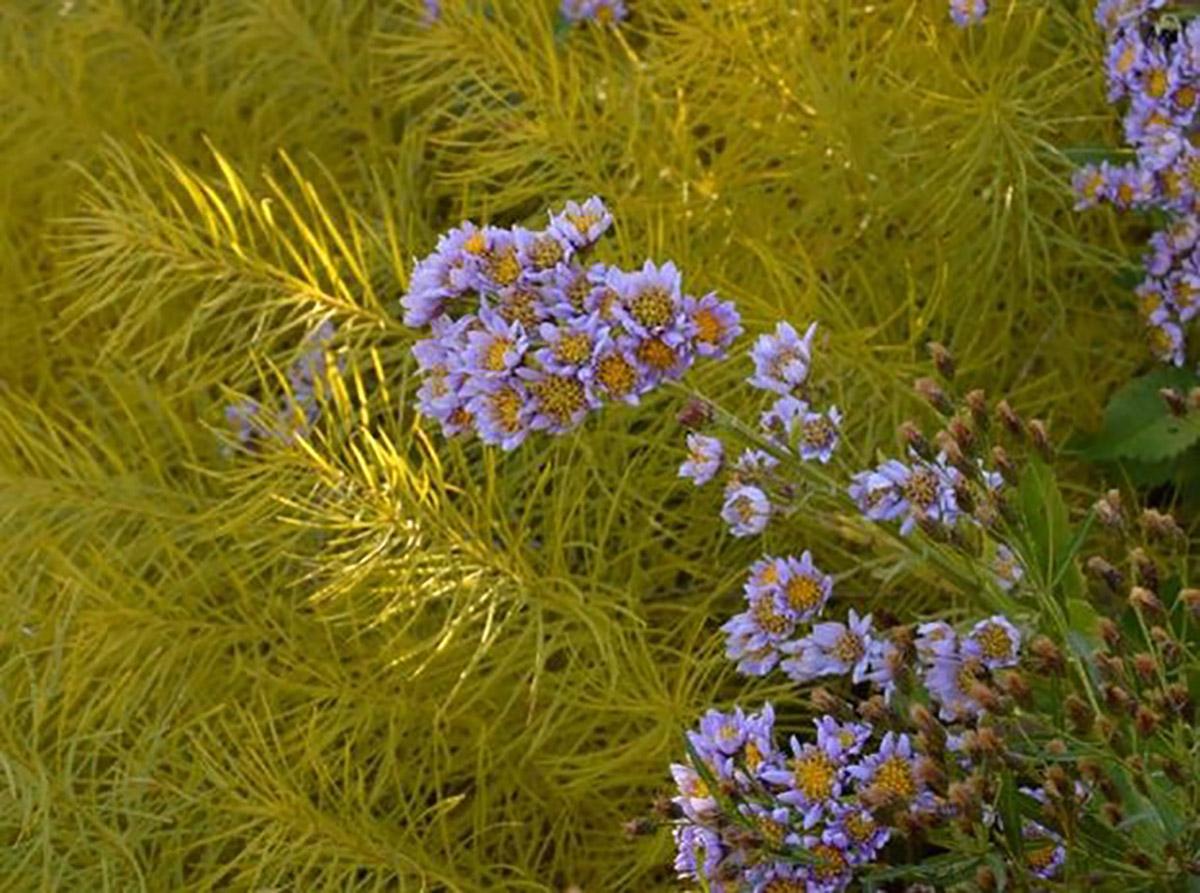
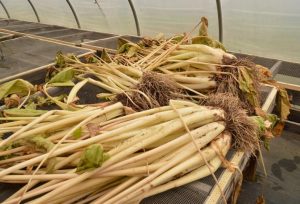 Prepare tuberous rooted plants for winter. Those such as Elephant Ears (Alocasia and Colocasia), Dahlia, Canna, and Banana (Musa and Ensete), which have a storage-type of root system can be dug, allowed to dry (as seen at right), cut back, wrapped in newspaper, and stored in a cool (50-55°F), dry basement. They can also be potted into a container and kept on the drier side throughout the winter.
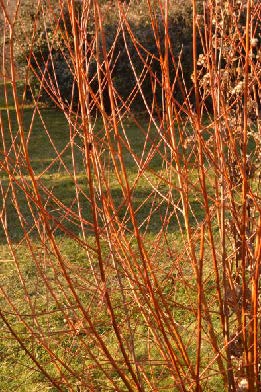 Time to take care of your containers. Bring in, empty and clean any valuable containers to prevent damage from freeze-thaw cycles of winter. Wash clay containers inside and out to remove salts from fertilizers. For plastic and other weather resistant containers, add annuals that are more tolerant of frost for autumn color, such as Chrysanthemums, Ornamental Cabbage, Kale or even Red Stemmed Willows (Salix alba ‘Britzensis’), which can remain and provide color throughout the winter (pictured at right)!
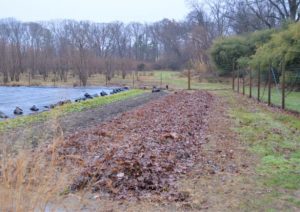 For the vegetable garden, it is time to finish harvesting potatoes and squash. Carrots, radish, chard, sun chokes, parsley and other cool season crops can be harvested as needed. Garlic should be planted by mid October and mulched with salt hay or shredded leaves (Pictured at right). Areas of the garden that are bare can be mulched with compost, manure (fresh or composted) or seeded with winter rye or other green cover crops. These cover crops can be turned into the soil early the following spring and provides a great source of organic matter.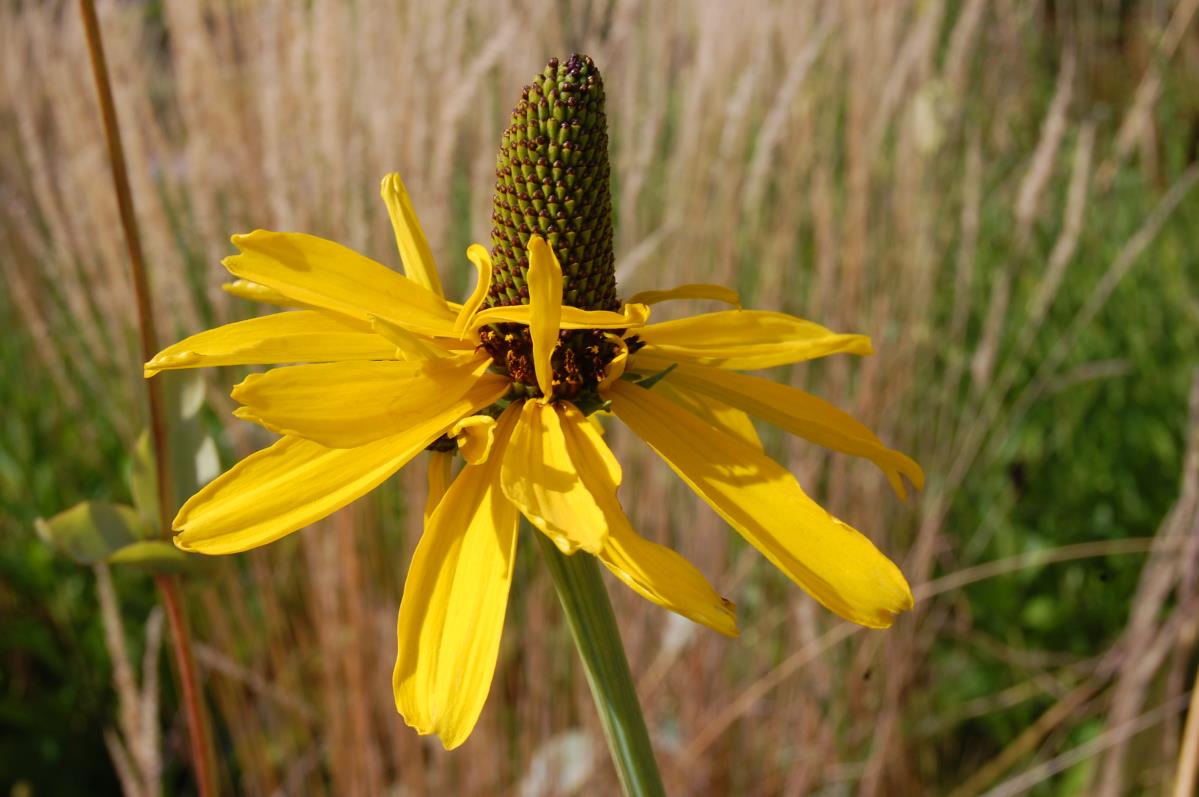
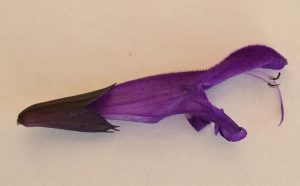 The common name of Sage also originated from the word Salvere, which transitioned to the Old French Sauge, and later to the Middle English Sawge before finally becoming the word we know today! The Swedish botanist, Carl Linnaeus (1707-1778) officially named it Salvia officinalis in 1753. It is also the ‘type’ species for the genus, to which any new or existing species are compared. The species epithet officinalis was a term that Linnaeus originally coined in 1735 and used repeatedly throughout his career. It stems from the Latin officina, which initially meant workshop or place of work. It transitioned to the name of a storage room in monasteries where medicines and medicinal plants were stored. Officinalis means ‘belonging to an officina’ and Linnaeus affixed this epithet time and time again to describe plants or animals that were known to have medicinal benefits.
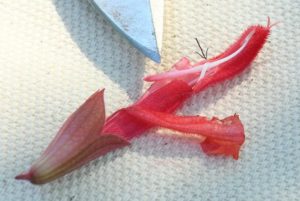 In most plants the connective is so reduced in size that the theca appear to be attached directly to either side of the filament. In Salvia, it is speculated that the anthers became reduced from an initial count of 4 to 2, while the connective became elongated, pushing one theca closer to the tip of the upper calyx lip and the other, nonpollen bearing theca, deeper into the base of the flower. Over time, the lower or basal theca lost their ability to generate pollen and joined together, producing a wishbone shaped structure that pivots on the tips of the two filaments. In the image above of Salvia Embers Wish™, the lower lip of the corolla was cut, exposing the nearly white connectives and filaments that are attached to the lower corolla. The knife tip is pointed to the lower, non-pollen bearing theca. The arrow points to the filaments, upon which the connective pivots. At the very base of the flower are the nectaries that are laden with a sugary liquid, which the pollinators naturally wish to reach when visiting the flower. When the insect or bird enters the flower or pushes in its beak to reach the nectaries, it hits the bottom end of the wishbone structure, allowing the two pollen releasing theca to pivot down upon the back or head of the visiting pollinator. After several days, the anthers finish releasing pollen while the two stigma that are seen protruding out of the front of the flower above, become receptive to pollen and lower, brushing across the back of the visiting pollinator and collecting the pollen deposited from a previous flower. Thus, the sacrifice of the two theca to create this pivoting wishbone structure actually enhanced the chance of pollination rather than diminished. In addition, with the anthers and stigmas ripening at different times, the flower will not ‘self-pollinate’, since crosspollination creates more vigorous offspring. Ingenious!
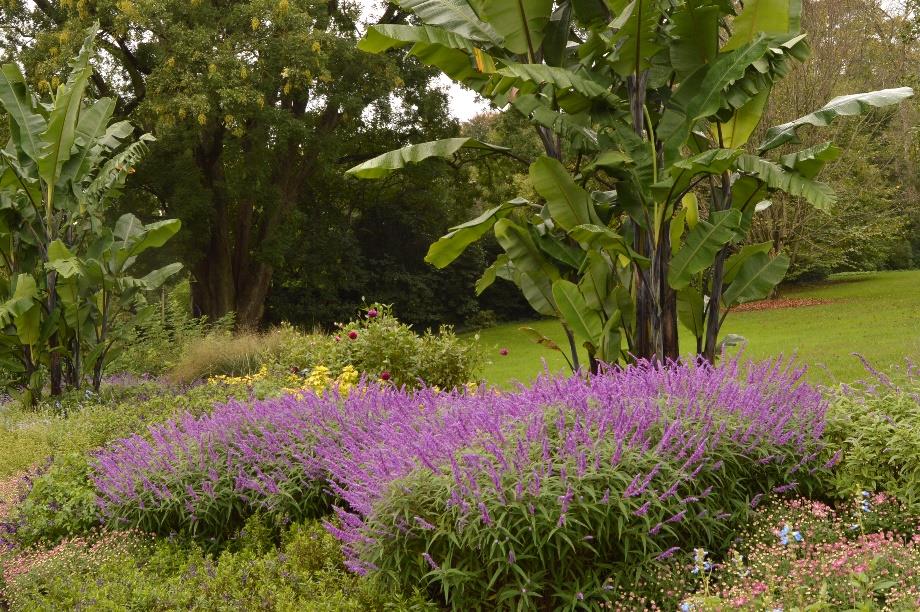
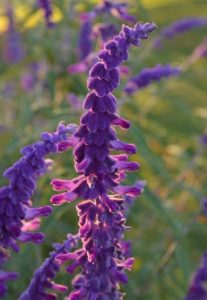 Although many summer blooming forms of Salvia are still in bloom come October, one of the best species for autumn is Salvia leucantha, commonly called Mexican Bush Sage. It is native to central and eastern areas of Mexico that feature tropical and subtropical weather conditions. In February of 1791 it was named by the Spanish botanist Antonio José Cavanilles (1745-1804), who was one of the first botanists from Spain to appreciate and accept Linnaeus’ concept of genus and species. Leucos is Greek for clear, white or pale, and Anthos is Greek for flower, describing the white flower that is subtended by a velvety purple calyx. As the weather cools, the flower color deepens to a light lavender in color, as seen in the image at right that was photographed in early November. The plants mature to 2-3’ tall and wide, with the arching, 4-6” long flowering racemes beginning to appear in late August and continuing until heavy frost. The 3-4” long leaves are oppositely arranged and much like the calyx, they are also slightly pubescent. Like all the species of Salvia, Mexican Bush Sage prefers full sun and well-drained soils and thanks to the scented foliage, it is also deer resistant. It also makes a superb container plant and is an excellent substitute for Chrysanthemums should you be looking for something different.