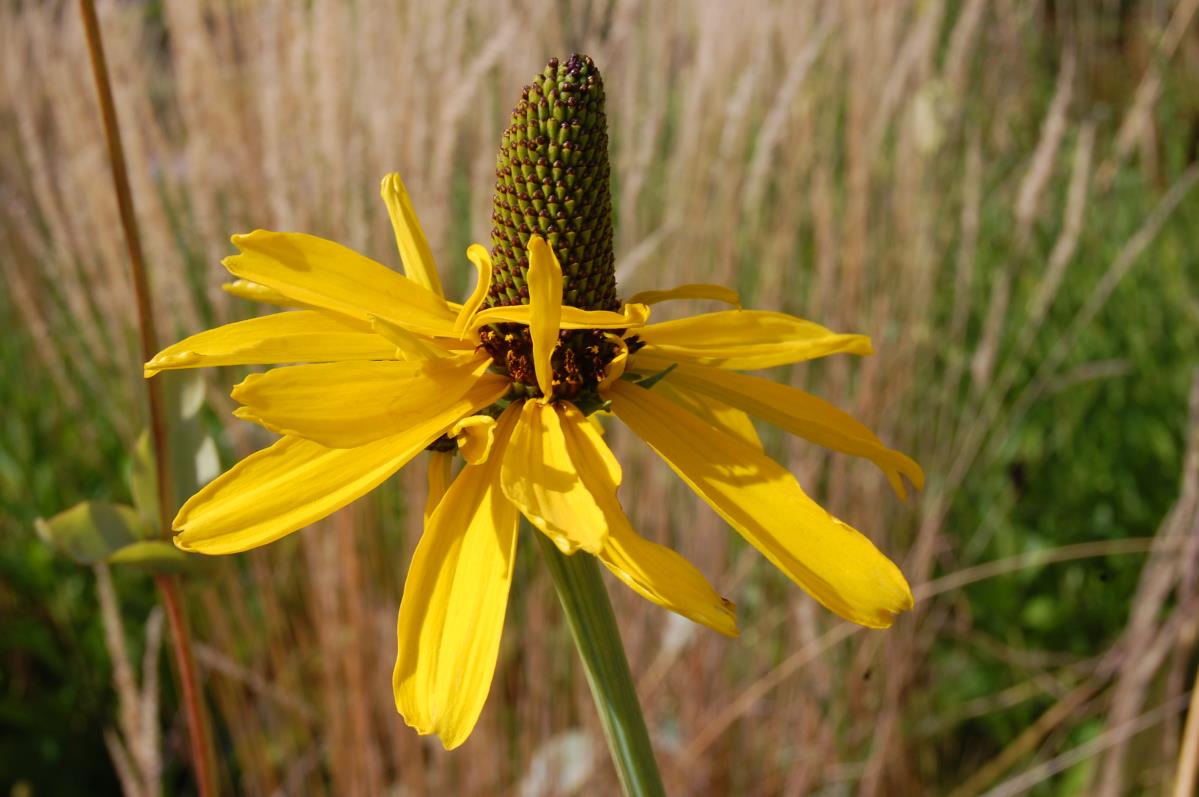


The hustle and bustle of the Holiday Season is finally upon us! November provided plenty of moisture, minimizing any worry for watering newly installed plants or evergreens. The temperatures were also warm, providing good root growth. This is the time to properly prepare the garden for winter as autumn truly bids us farewell and the sub-freezing temperatures of winter are just around the corner. As time permits between the cooking and the ‘online’ shopping, continue your ledgers with notes on the weather and how plants are performing. Wishing everyone a very Happy and Merry Holidays!
Things to do:
-
- Finish removing leaves from lawn areas. If possible, shred the leaves with the lawn mower and add them to perennial or annual beds as mulch. The shredded leaves that remain in the turf are actually very beneficial for the grass.
- Many people think that the decaying leaves look unattractive and should be removed from beds around the home. However, the leaves, whether shredded or whole are very important to our biosphere and should be used as mulch wherever possible!
- If you have water features or ponds, keep the leaf nets over the pond at least through months’ end or until prolonged subfreezing temperatures are predicted to keep any leaves that are still blowing about from getting into the pond.
-
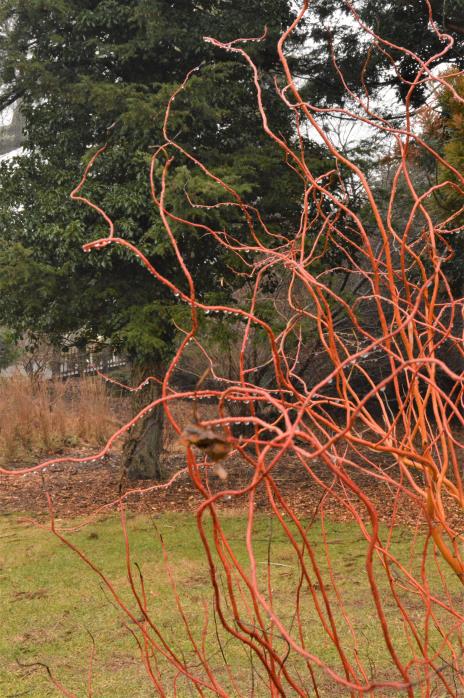
- Decorate those plastic and fiberglass containers or window boxes that can remain outdoors for the winter. Evergreen boughs such as Yew, Pine, Hemlock, Juniper Southern Magnolia, Holly or Cherry Laurel can be pruned from the garden to decorate the container. For large pots, add containers of red stemmed Dogwoods (Cornus sericea or Cornus sanguinea) or Willow (Salix alba ‘Britzensis’ or Salix x ‘Swizzlestick’) for their glowing red stems. The dancing stems of Salix x ‘Swizzlestick’ are pictured at right. Add some white painted birch stems, which many Garden Centers carry and an attractive winter container will result! Come spring, the containers of woody plants can be removed and added to strategic locations within your garden.
- If you have recently planted an evergreen, make certain that the soil remains moist in case we have several weeks without another rainfall. A 3-4” layer of mulch over the roots certainly helps to retain the moisture and will moderate the depth to which the soil will freeze, reducing the plant’s ability to absorb water.
- Rhododendrons, Holly and other broadleaf evergreen shrubs that have been planted this fall will benefit from an application of an anti-desiccant spray. Apply during periods when the temperatures are above freezing for several hours and continue to reapply as temperatures permit though the winter according to directions.
- Finish cutting back those perennials which have collapsed to the ground, especially around the base of newly planted trees. The debris acts as a veil for hungry mice during the winter who enjoy eating the tree bark throughout the winter.
- By the same token and wherever possible, leave the stems and seed heads of Black Eyed Susan (Rudbeckia), Cup Flower (Silphium), Purple Cone Flower (Echinacea) and similar flowers standing for the winter, since the seeds provide food for the birds and the hollow stems habitat for beneficial insects!
- Equally as important, allow hollow stemmed shrubs such as our native Hydrangea (Hydrangea arborescens) and Elderberry (Sambucus canadensis) to remain standing through the winter and refrain from cutting off dead wood where possible. The hollow stems serve as a winter home for our beneficial insects as well as a location to lay eggs in the season to come.
- Finish digging up Canna and Banana tubers, letting the soil dry so it can be knocked off once brought into the garage and then wrapped and stored in a cool basement.
- Finish gathering seed from various annuals that are not hybrids as they will come true from seed. Dry and place in labeled packets for sowing come spring!
- Remove the old foliage from Bearded Iris (Iris germanica) that is now shriveled, brown and laying on the ground. These leaves harbor potential egg masses from the Iris Borer that were laid by the adult moth and are poised to hatch and enter through the flower stem come May.
-
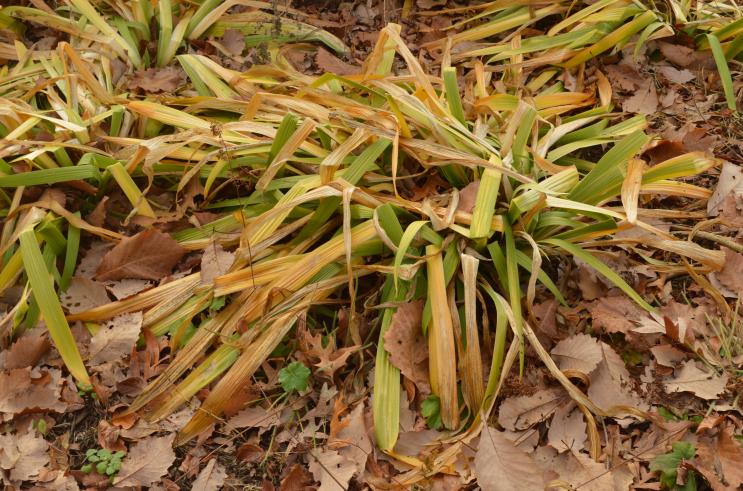
- Bearded Iris is not the only Iris that should be cleaned up for winter, as it is a good idea to remove the foliage from most all the Iris for the winter. They may not be subject to the Iris Borer, since they do not possess large rhizomes, but previous season’s foliage provides an ideal cover for winter roaming mice. The root systems of all Iris make a tasty winter’s snack! Iris tectorum (Japanese Roof Iris) is picture above.
- Consider edging bedlines if the ground is not frozen and time avails, as it will be one less item to consider come the spring! In general, it is easier to dig in the fall since the soil is not as damp. Do not dig the edge of the bed too deep, as lawnmower wheels are likely to fall into the trench and scalp the lawn.
- Pot-up daffodils, tulips or minor bulbs into shallow pots and place them in the back of an unheated or minimally heated garage for the winter. Water when the soil appears dry. As the shoots begin to appear in February, place them in a sunny but cool window. They will provide nice early color to the kitchen table in March or for outdoor containers in March, April and May.
- For Tea Roses, mulch the graft union with soil, leaves or shredded bark after the soil has started to freeze. This will ensure that the named selection that has been budded onto a rootstock will not perish during the winter. It is often beneficial to partially prune Tea Roses back to reduce any potential wobbling due to winter winds. Complete the pruning come spring.
- Winterize lawn mowers and other gas-powered equipment. This entails cleaning or replacing the filters and amending the fuel with an additive that will prevent it from becoming more viscous and potentially blocking fuel lines come spring.
- If there is access to composted or even fresh horse or cow manure, it can be spread now in the annual beds (not vegetable or perennial). Shredded leaves can be spread as mulch for vegetable gardens if there was not sufficient time to sow a cover crop as it adds organic matter back into the soil.
- Finish cleaning out old plants from the vegetable garden and take note of where various plants were located this past year allowing for crop rotation, even if on a minimal scale.
- Continue to adjust houseplants that prefer less direct sunlight as the sun continues to dip lower in the sky and reach further into the room.
- Take inventory of potting soil, seed starting materials and gardening tools. If some of your inventory is in need of replacement or updating, they might make good Holiday gifts should you be that person who already has everything!
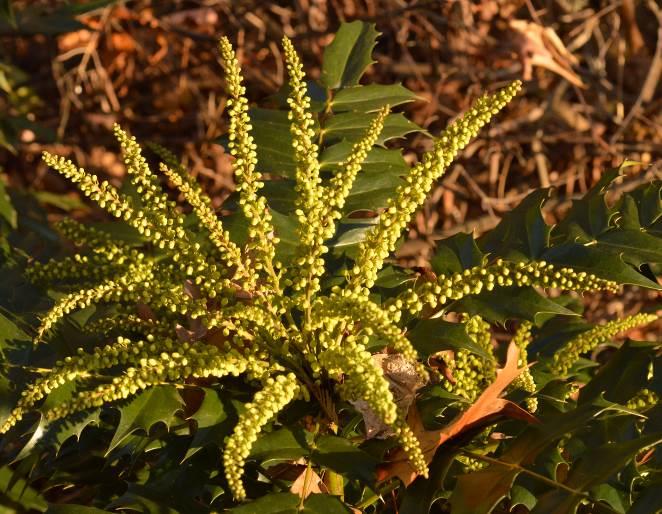
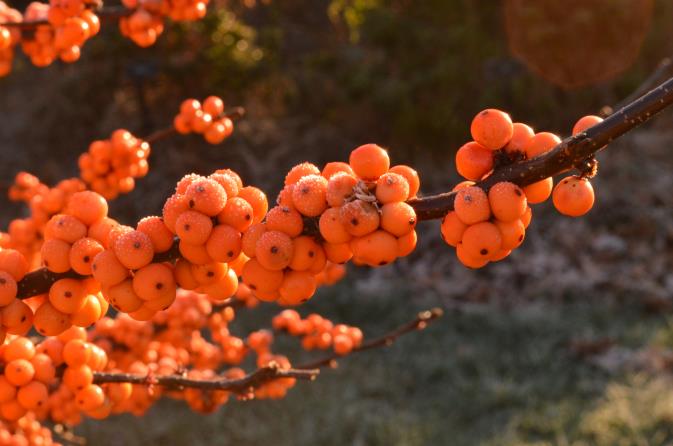
- Evaluate the Garden to see if it is in need of additional December flowering or fruiting cheer! Plants like Mahonia x ‘Charity’ (pictured at right on November 23, 2019), Climbing Aster (Symphyotrichum carolinianum) and Witch Hazel (Hamamelis virginiana) are presently in full bud or bloom and Winterberry Holly (Ilex verticillata) is full of glorious red, yellow or orange fruit depending upon the cultivar! Ilex verticillata ‘Winter Gold’ is photographed at right.
Bruce Crawford
Program Leader in Home and Public Horticulture
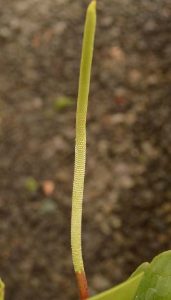 Peperomia is in the family Piperaceae or Pepper family, which derives its common familial name not from peppers we eat as a vegetable, but from Piper nigrum, the source of black pepper! The genus Peperomia consists of nearly 1,000 species, most of which are found throughout tropical regions of South America, although a few are located in Africa, Mexico and the Caribbean. The genus name was penned by the Spanish Botanists Hipólito Ruiz López (1754-1816) and José Antonio Pavón Jiménez (1754-1840) in 1794, following their 3 botanical tours of Peru and Chile during 1777 and 1788. The name Peperomia comes from the Greek Pipéri for pepper and Hómoios for resembling or similar, once again a tribute to its distant cousin Piper nigrum. The common name of Radiator Plant was coined by the famed horticulturist Liberty Hyde Bailey (1858-1954); since the plants enjoy warm air and bright light, much as one would find on a window sill above a radiator, he deemed it apropos! For nearly all species of the genus, the foliage provides the primary ornamental appeal, although the flowers are intriguing. The horizontal rows of small flowers are located along a 2-5” long spike (image at right) that emerges from the apical tip of a stem. They are certainly not stunning, but they do provide a touch of interest. Very little research has been conducted on the flower pollination, but it appears many of the plants produce seed asexually via agamospermy, whereby unfertilized ovules yield viable seeds!
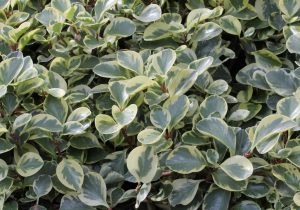 One of the easiest species to grow is Peperomia obtusifolia, commonly called Blunt Leaved Radiator Plant or Baby Rubber Tree. The species epithet comes from the Latin Obtusus for dull or blunt and Folium for leaf, providing the foundation for one of its common names. Originally described by the German botanist Albert Gottfried Dietrich (1795-1856) in 1831, this native of Mexico and the Caribbean has 1-2” glossy round leaves that appear along stout stems. The plant produces a low, almost shrubby habit, growing to 18” tall by 2’ or greater in diameter. The stems are somewhat brittle and care should be exercised when handling. For December, the form ‘Variegata’ sports attractive creamy white and soft green variegation. Interestingly, there are several forms of ‘Variegata’ on the market. Some have a broad, creamy white margin with an irregular, silvery green central splash that nicely compliments the deep red color of the younger stems (as seen on the left). Others have mottled white and green foliage that is somewhat less impactful yet still very attractive. Regardless, these forms provide great colors for the season.
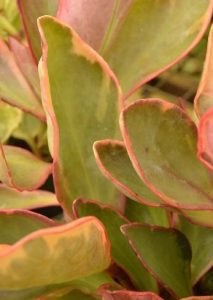 Another easily grown species is Peperomia clusiifolia, the Red-edge Peperomia. Originally named Piper clusiifolia in 1789 by the Dutch Chemist, Doctor and Botanist, Nicolaus Joseph von Jacquin (1727-1817), it was not until 1829 that the British systematic botanist William Jackson Hooker (1785-1865) properly described the plant. Native to the West Indies and Venezuela, the species name describes how the leaves are similar to the tropical genus of woody plants Clusia, which was named after the famed Artois botanist, Carolus Clusius (1526-1609). The plants have thick waxy paddle shaped leaves, growing to 3-4” long with a prominent red margin and red stems. The variety named Tricolor (pictured at right) features foliage splashed with red, white and green, producing a most attractive plant for the home that can be paired very nicely with some Poinsettias! As with the previous species, plants reach upwards of 18” tall and gradually spread to 18-24” around.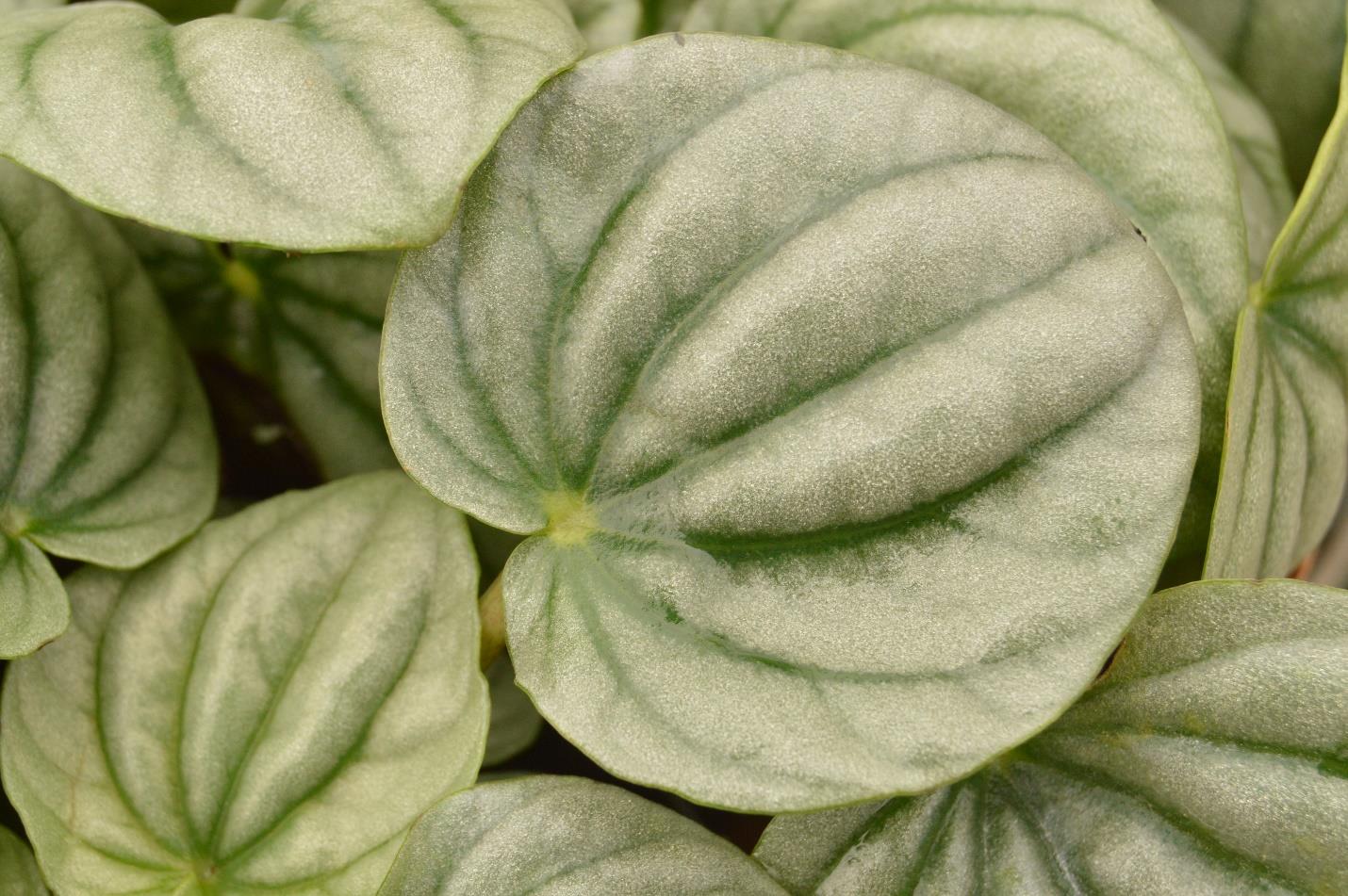
 Aster tataricus is native to the cold regions of Siberia, Northern China, Mongolia, Korea and Japan, where it is native to moist meadows and wetlands. It is a member of the Asteraceae or Sunflower family, which contains close to 32,000 species. Carl Linnaeus (1707-1778) first penned the genus name in 1753 from the Greek Astēr for star, referring to the star-like form of the flowers. Linnaeus established Aster amellus, the European Michaelmas Daisy as the type flower to which all the other plants for this genus are referenced. Initially home to an enormous number of species, the genus was reduced to around 180 species found throughout Eurasia, based on more recent and improved understanding of the genetics. Carolus Linnaeus the Younger (1741-1783), continuing in his father’s footsteps, published this species in 1781 in his book Supplementum Plantarum. The species epithet tataricus comes from Tartay, an archaic name for the geographic region that extended from the Caspian Sea and Ural Mountains east to the Pacific Ocean, including the areas to which this plant is native.
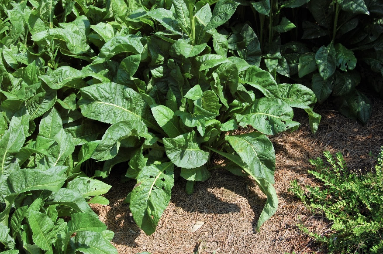
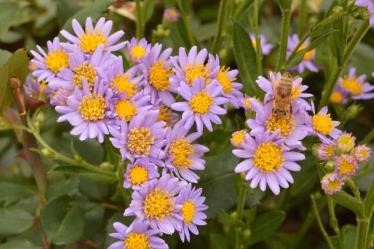 Aster tataricus is a robust plant, to say the least. The coarse, paddle-like shape of the foliage always reminding me of Horseradish with the basal green leaves reaching 16-24” long and up to 6” wide (pictured above). The plants are rhizomatous in nature and can spread over a fairly substantial area of the garden, providing a rather pleasing yet coarse groundcover. In late August to mid-September, the flowering stems elongate, reaching an impressive height of 5-8’ before blooming! The stems are hispid or clothed with straight bristly hairs along with more modestly sized leaves of 3-4” in length and 1” wide. The top of the flower stem branches freely, producing abundant flower buds that open from late September through early November. The flowers (pictured at right) typically have between 12-18 lavender-blue to blue ray florets that resemble petals, surrounding a center of yellow disc florets, creating a beautiful display.
 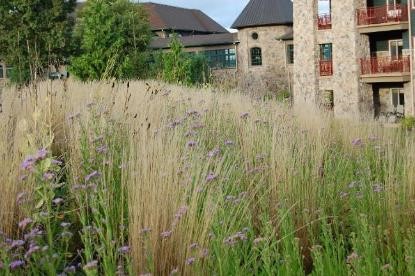 The blue flowers peaking above the grassy foliage, providing a very natural appearance similar to their native meadows. The flowers also have great symbolism. Hanakotoba is the ancient Japanese art of assigning a meaning to a flower, which in turn allows a person to communicate with others without any spoken words. ‘Flower talk’ so to speak! Aster tataricus expresses remembrance, a tribute I suspect due to its late blooming nature!
 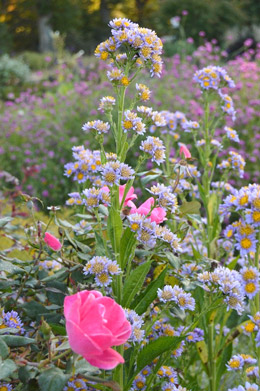 If the species form is a bit too tall, the selection named ‘Jindai’ grows to a more controlled height of 3-4’ tall. Rick Darke of Longwood Gardens and Sylvester ‘Skip’ March of the U.S. National Arboretum discovered this selection at the Jindai Botanic Gardens in Tokyo Japan during 1985. Although shorter in height, they are still spreading in nature and need to be watched to ensure they do not grow beyond their bounds by removing unwanted rhizomes early in spring. I have also found this habit to be a benefit, since the plants will spread into neighboring shrubs and create some attractive combinations. In one instance, as pictured at right, the Aster has spread amongst a Bonica® Shrub Rose and the sky blue flower of the Aster looks great growing amongst the soft pink flowers of the Rose! It has also spread into a Salix alba ‘Britzensis’, commonly known as Coral Bark Willow that is coppiced or pruned back to 8-10” annually. The stems of the Willow develop a light red coloration by mid-October, providing a nice backdrop for flowers. Another pleasant combination is with Amsonia hubrictii, the Blue Star Amsonia; the yellow fall color of the Amsonia pairs beautifully with the central yellow disc flowers of the Aster, as seen in the image below. So many combinations!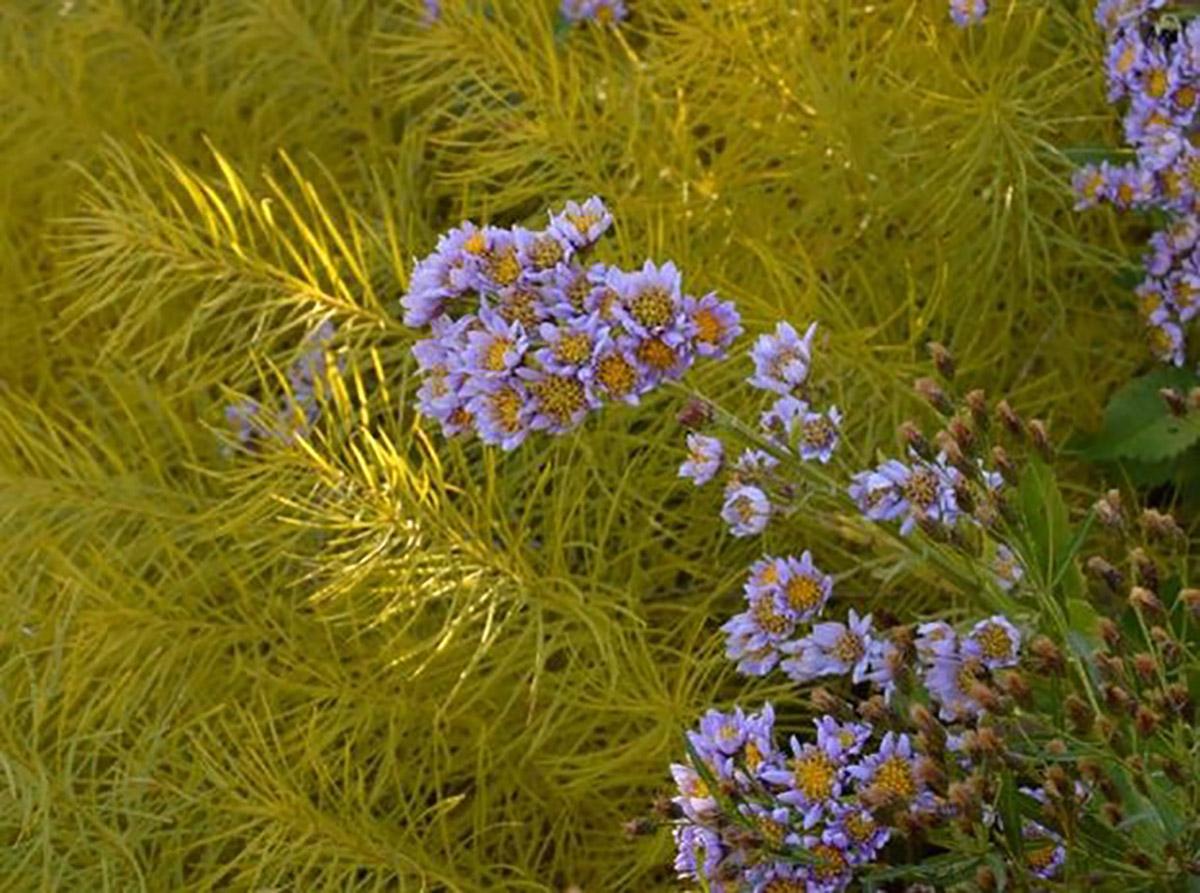
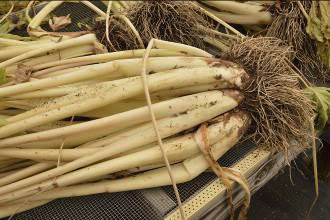
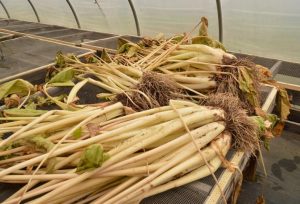 Prepare tuberous rooted plants for winter. Those such as Elephant Ears (Alocasia and Colocasia), Dahlia, Canna, and Banana (Musa and Ensete), which have a storage-type of root system can be dug, allowed to dry (as seen at right), cut back, wrapped in newspaper, and stored in a cool (50-55°F), dry basement. They can also be potted into a container and kept on the drier side throughout the winter.
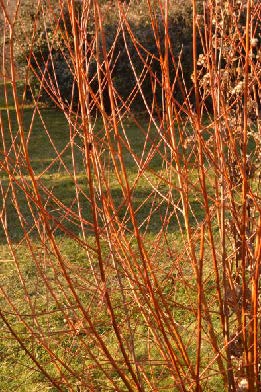 Time to take care of your containers. Bring in, empty and clean any valuable containers to prevent damage from freeze-thaw cycles of winter. Wash clay containers inside and out to remove salts from fertilizers. For plastic and other weather resistant containers, add annuals that are more tolerant of frost for autumn color, such as Chrysanthemums, Ornamental Cabbage, Kale or even Red Stemmed Willows (Salix alba ‘Britzensis’), which can remain and provide color throughout the winter (pictured at right)!
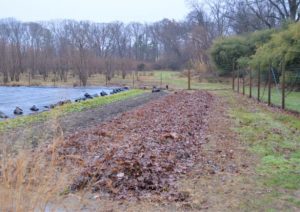 For the vegetable garden, it is time to finish harvesting potatoes and squash. Carrots, radish, chard, sun chokes, parsley and other cool season crops can be harvested as needed. Garlic should be planted by mid October and mulched with salt hay or shredded leaves (Pictured at right). Areas of the garden that are bare can be mulched with compost, manure (fresh or composted) or seeded with winter rye or other green cover crops. These cover crops can be turned into the soil early the following spring and provides a great source of organic matter.